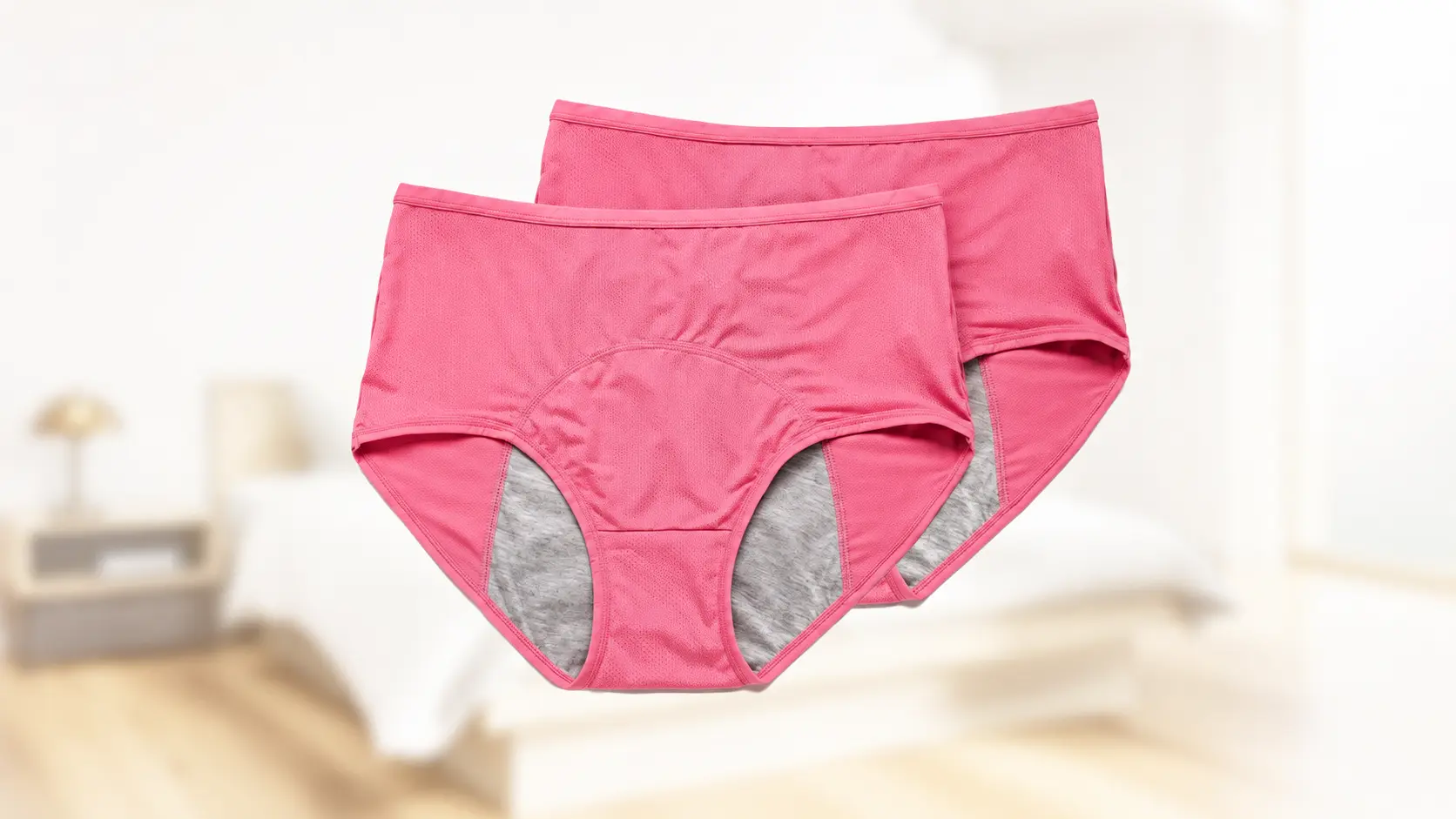
Postpartum bladder leaks are common. Wearing a pad for months shouldn't be.
You sneeze and lose a little. You pick up the baby and lose a little. Nobody warned you, and the pads you were handed at the hospital were never designed for a school run, a gym class or a pair of leggings.
Nine months of weight on the pelvic floor, followed by delivery, leaves the muscles that hold the bladder closed temporarily weakened. Any sudden pressure — a cough, a laugh, a jump — pushes urine past them.
For most women it improves substantially within three to six months, especially with pelvic floor training. DryGuard covers you through that window without you having to think about it.
What new mums actually need from protection
You are carrying a baby, bending, lifting and rarely sitting still. Protection that has to be repositioned every hour is protection that fails.
Stays put during lifting, bending and feeding
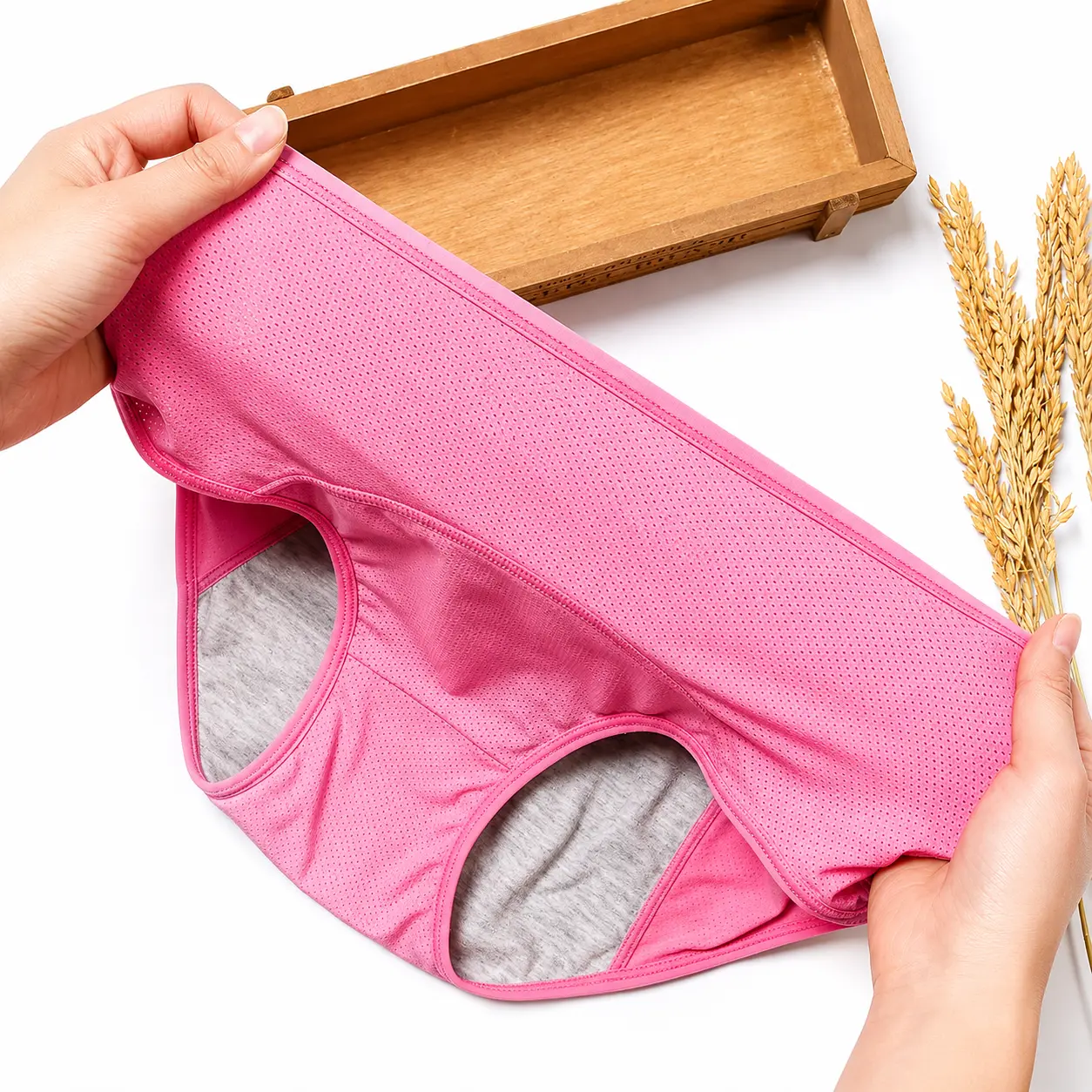
No crinkle when you are trying to keep a baby asleep
Machine washable — one more thing that goes in the normal load
Sits flat under leggings, jeans and postpartum shapewear
A high, soft waistband that sits above a C-section scar rather than across it.
Six pairs covers a full laundry cycle — and costs less than 4 months of pads.
Skipping, running and box jumps are the classic triggers. Because the DryGuard core is sewn into a wide gusset rather than sitting loose, it stays in position through impact and absorbs up to 30 ml — far more than a typical exercise leak.
Several customers describe their first leak-free class as the moment they stopped avoiding the gym entirely.
When to speak to a professional
If leaks continue past three months, worsen, or come with pain, urgency or blood, see your GP or a pelvic health physiotherapist. DryGuard is comfortable everyday protection, not a treatment, and it should never delay care you need.
A realistic timeline for the first year
Recovery is not linear, and knowing roughly what to expect stops you assuming something has gone wrong. This is the pattern most women describe, alongside what protection tends to suit each stage.
Stage
What is usually happening
What tends to work
Weeks 0–2
Lochia bleeding plus frequent leaks
Hospital-grade disposables; DryGuard once bleeding is light
Weeks 2–6
Bleeding easing, leaks on cough and lift
Leak-proof underwear one size up, high waistband
Weeks 6–12
Cleared for exercise, leaks on impact
Daily rotation, plus pelvic floor physiotherapy
Months 3–6
Steady improvement for most women
Fewer pairs needed; keep one for workouts
Beyond 6 months
Persistent leaks are not something to wait out
See a pelvic health physiotherapist or GP
After a C-section: what changes
A caesarean does not protect you from postpartum leaks — nine months of pressure on the pelvic floor happens regardless of how the baby arrives. What changes is the fit requirement. The scar sits low, and anything with a waistband that lands directly on it will be uncomfortable for weeks.
Order one size up and wear the waistband high, above the incision. Avoid anything with a compression panel across the scar line until your six-week check, and stop immediately if you notice increased redness, heat or discharge at the site — that needs a clinician, not a different pair of underwear.
Night feeds, leaking and sleep
The first months involve broken sleep and repeated getting up, which is exactly when leaks are most likely — a full bladder, a rushed stand, and no time. Keeping a pair on overnight removes the calculation about whether you can make it to the bathroom while holding a baby.
Two pairs on the nightstand is the practical setup. Capacity is 30 ml per pair, so if your night leaks are heavier than that, keep a waterproof mattress protector on for the first few weeks rather than assuming a garment will cover it.
Pelvic floor rehabilitation, briefly and usefully
Supervised pelvic floor muscle training is the best-evidenced first-line treatment for postpartum stress incontinence, and a physiotherapist can check that you are contracting the right muscles — a large share of women are not, and are quietly training the wrong ones for months.
A workable starting routine, if you have been cleared to begin: draw up and in as though stopping wind, hold for three to five seconds, release fully, repeat eight to ten times, three times a day. Improvement usually shows in six to twelve weeks, not days.
Do not practise by stopping your urine mid-stream — it teaches the wrong pattern
Full relaxation between contractions matters as much as the squeeze
Add quick one-second contractions before a cough or lift ("the knack")
Treat constipation early; straining undoes the work
Ask for a referral rather than waiting to see if it settles on its own
The part nobody prepares you for
Postpartum leaking is common enough to be unremarkable and private enough that almost nobody mentions it, which is why so many women assume they are the only one avoiding the trampoline park. Roughly a third of women leak in the first year after birth. It is not a personal failure, it is a soft-tissue injury with a well-understood recovery path.
After my hysterectomy I leaked every time I coughed. Pads shifted and smelled. My first DryGuard pair held through a two-hour walk and I honestly cried a little. I've worn nothing else for four months.
Margaret T., 62Columbus, OH · Verified buyer
Nobody can tell — that was the whole point
They look and feel like regular briefs under leggings. No crinkle, no bulk, no smell. My daughter borrowed a pair postpartum and immediately ordered her own.
Denise R., 58Sarasota, FL · Verified buyer
Saved me about £40 a month on pads
I washed the first set over 60 times and they still hold. It paid for itself in the second month. Ordered the 10 pair so I never have to think about laundry day again.
Yvonne K., 67Leeds, UK · Verified buyer
FAQ
Common questions
Dry for 90 days or your money back
Wear them. Wash them. Put them through a real week. If DryGuard is not the most comfortable, most reliable protection you have ever worn, email us and we refund every cent — worn pairs included, no return shipping needed.
Full refund of what you paid, including shipping
One email to support — no forms, no phone queue
Keep the pairs you already wore and washed
Refunds land back on your card within 5 business days