Incontinence underwear for women that nobody can tell you're wearing
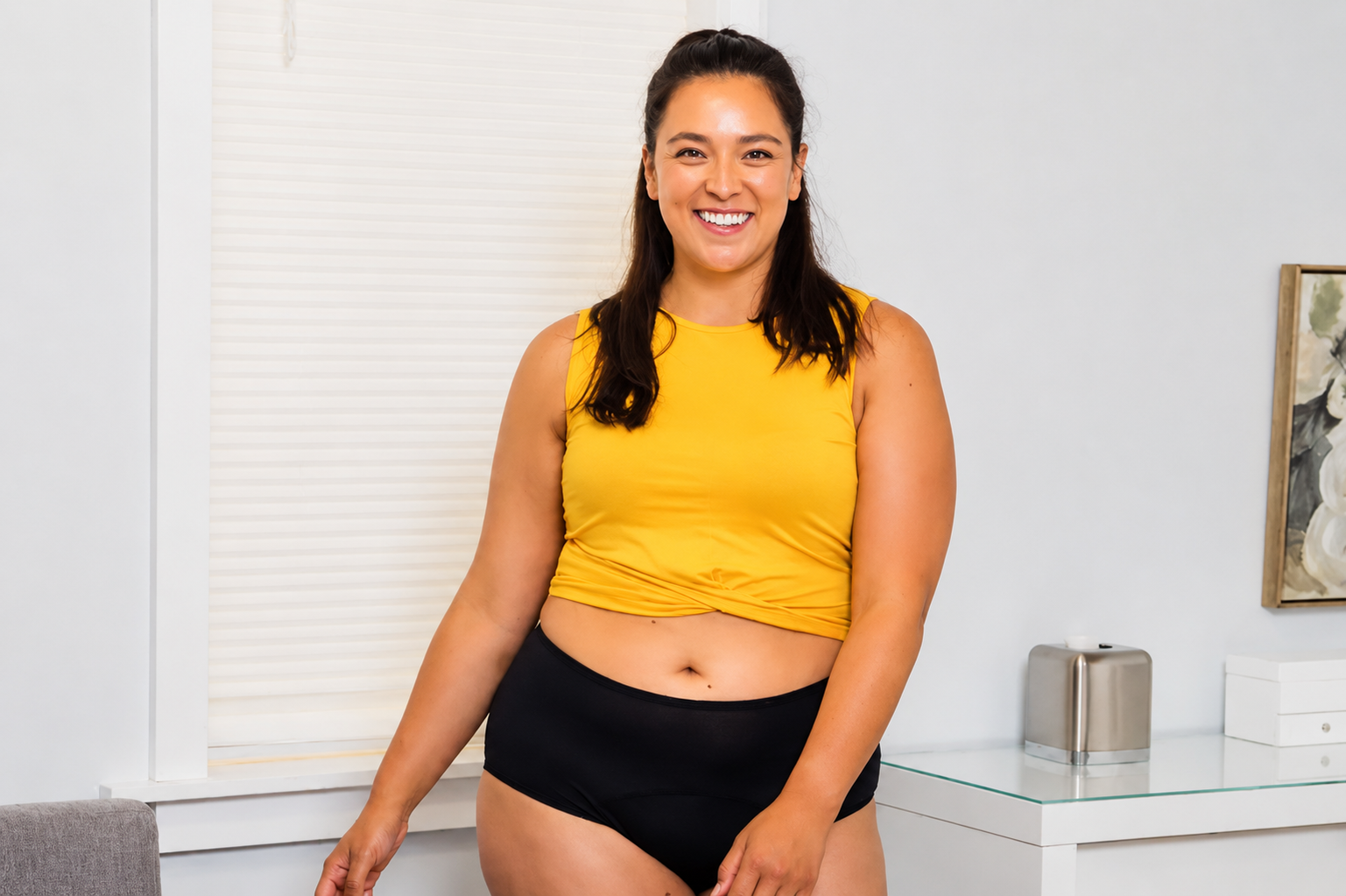
If you have been buying bladder pads in the same supermarket aisle for years, this is the upgrade you didn't know existed: underwear that absorbs a full bladder release, controls odour and looks exactly like the briefs already in your drawer.
A pad has to stay perfectly positioned to work. It doesn't. It shifts when you walk, folds when you sit, and announces itself with a crinkle every time you cross your legs. Worse, the plastic backing traps heat against skin that is already irritated.
DryGuard moves the protection into the garment itself. The absorbent core is stitched into a wide gusset that follows your body, so there is nothing to reposition and nothing to fall out of place mid-day.
No adhesive strip, no shifting, no visible outline
Cotton against your skin instead of plastic film
Wash and wear again — no monthly resupply run
How much protection do you actually need?
Light leaks — a few drops when you sneeze, cough, laugh or lift — are the most common pattern in women over 40, and a single DryGuard pair handles a full day of them comfortably.
If you experience urge leaks where a larger volume arrives with almost no warning, DryGuard's 30 ml capacity covers a typical release. Women with heavy overnight leakage often pair DryGuard with a waterproof mattress protector for extra peace of mind.
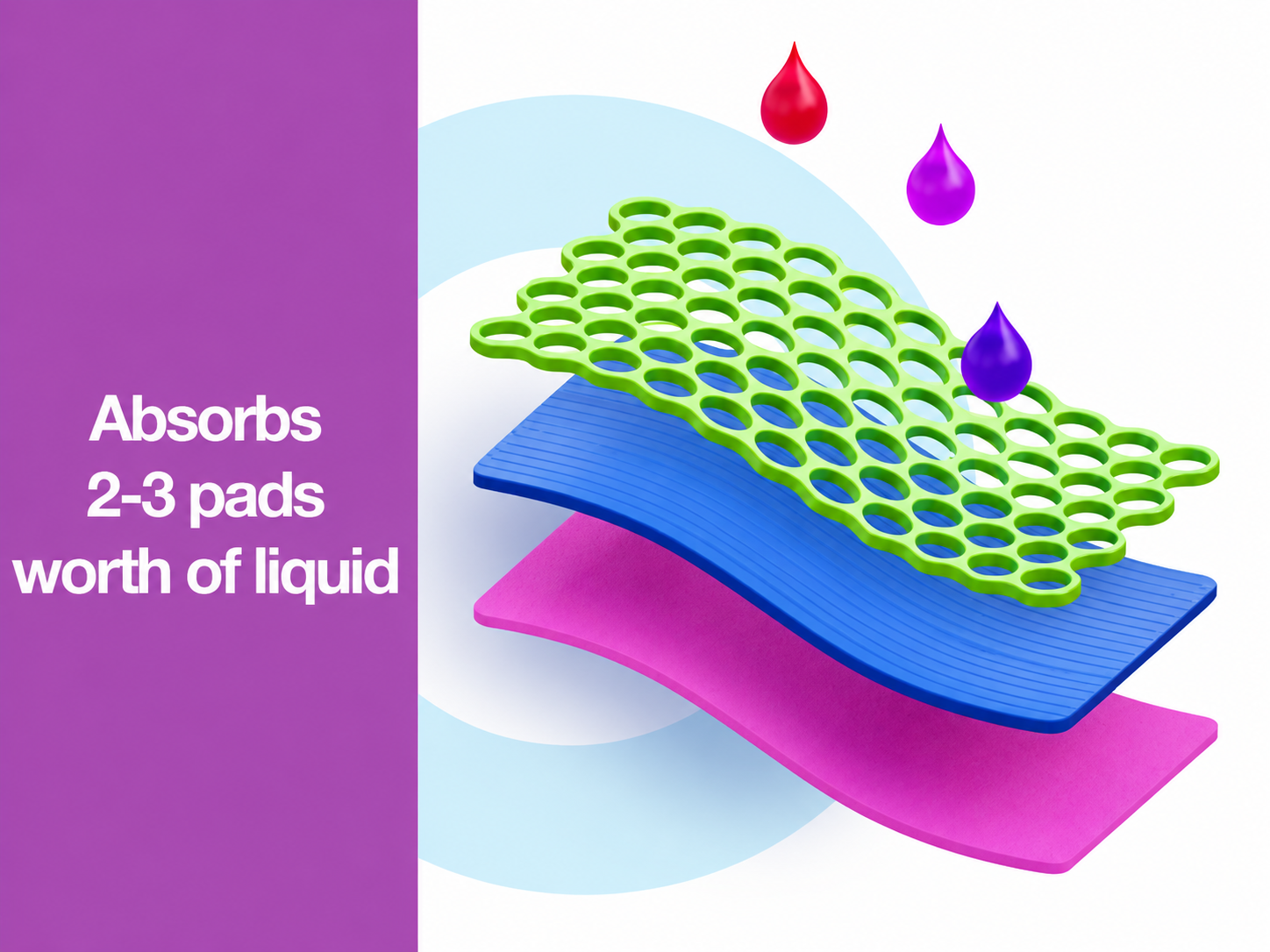
Each pair holds up to 30 ml — about two to three light bladder pads.
Six pairs covers a full laundry cycle — and costs less than 4 months of pads.
Order your normal underwear size. The waistband is a soft flat elastic that will not dig in, and the leg openings are laser-cut so there is no visible line under leggings or a fitted skirt.
If the fit is not right, exchanges are free within 90 days — we will send a different size before you post anything back.
Caring for your underwear so it lasts 200+ washes
Rinse in cold water after wearing, then machine wash cold on a gentle cycle with your regular detergent and hang to dry. Avoid fabric softener and bleach — both coat the absorbent fibres and reduce capacity over time.
With that routine, each pair stays fully absorbent for around two years of daily rotation, which is why a six-pair bundle typically replaces about 1,400 disposables a year.
Which type of bladder leak do you have?
Choosing protection is much easier once you can name the pattern. Most women fit one of four, and the right product differs for each.
Type
What it feels like
Typical trigger
What usually helps
Stress incontinence
A small release with no warning
Cough, sneeze, laugh, lift, jump
Leak-proof underwear plus pelvic floor training
Urge incontinence
Sudden overwhelming need, little time
Cold, running water, arriving home
Higher-capacity protection, bladder retraining
Mixed incontinence
Both patterns in the same week
Varies day to day
Daytime underwear, night-time backup
Overflow
Constant dribbling, incomplete emptying
Often medication or nerve related
See a GP before choosing any product
Why this is so common — and why almost nobody talks about it
Around one in three women experiences urinary leakage at some point, and prevalence rises sharply after menopause as falling oestrogen thins the tissue supporting the urethra. Childbirth, chronic coughing, high-impact exercise and simple ageing of the pelvic floor all contribute.
The silence around it does real damage. Surveys consistently find that women wait years before mentioning leaks to a clinician, and in the meantime they quietly withdraw — from exercise classes, long journeys, choir practice, grandchildren's trampolines. The product fixes the laundry problem; naming it out loud fixes the rest.
What a normal day looks like once you switch
Morning: put on a pair like any other underwear. There is no adhesive strip, nothing to position and nothing to check in the mirror.
Daytime: a sneeze or a lift releases a small amount, the wicking layer moves it into the core within about two seconds, and the surface feels dry again. Most women wear one pair for a full day; if you leak heavily, change at lunchtime and carry the used pair in a pouch.
Evening: rinse in cold water, drop it in the machine on a cold gentle cycle with the rest of your laundry, hang to dry overnight. That is the entire routine, and it is why a six-pair rotation removes the supermarket run permanently.
What underwear cannot do, and what to do alongside it
Leak-proof underwear manages the consequence, not the cause. Pelvic floor training remains the best-evidenced first-line approach for stress incontinence, and a pelvic health physiotherapist can assess whether you are contracting correctly — a surprising number of women are not.
See a GP promptly if leaks arrive suddenly, come with pain, blood or burning, follow a new medication, or are accompanied by difficulty emptying your bladder. None of those are things a garment should be used to cover up.
Pelvic floor exercises daily, ideally checked by a physiotherapist
Cut back on caffeine and fizzy drinks for two weeks and note the difference
Keep drinking water — reducing fluids concentrates urine and irritates the bladder
Treat constipation, which increases pressure on the pelvic floor
Ask about oestrogen cream if you are post-menopausal — it helps some women considerably
Choosing between the brands on the shelf
There are now dozens of leak-proof underwear brands and the marketing is largely interchangeable. Four questions separate them: what is the stated capacity in millilitres, how many wash cycles has it been tested to, is the guarantee valid on worn pairs, and can you reach a person if something goes wrong. A brand that answers all four plainly is a brand that has done the testing.
After my hysterectomy I leaked every time I coughed. Pads shifted and smelled. My first DryGuard pair held through a two-hour walk and I honestly cried a little. I've worn nothing else for four months.
Margaret T., 62Columbus, OH · Verified buyer
Nobody can tell — that was the whole point
They look and feel like regular briefs under leggings. No crinkle, no bulk, no smell. My daughter borrowed a pair postpartum and immediately ordered her own.
Denise R., 58Sarasota, FL · Verified buyer
Saved me about £40 a month on pads
I washed the first set over 60 times and they still hold. It paid for itself in the second month. Ordered the 10 pair so I never have to think about laundry day again.
Yvonne K., 67Leeds, UK · Verified buyer
FAQ
Common questions
Dry for 90 days or your money back
Wear them. Wash them. Put them through a real week. If DryGuard is not the most comfortable, most reliable protection you have ever worn, email us and we refund every cent — worn pairs included, no return shipping needed.
Full refund of what you paid, including shipping
One email to support — no forms, no phone queue
Keep the pairs you already wore and washed
Refunds land back on your card within 5 business days